Memorial Service
The celebration of life held at Grey Lynn Returned Services Club, 10 April 2026.
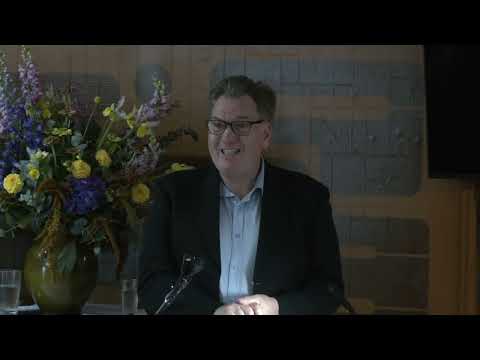
The celebration of life held at Grey Lynn Returned Services Club, 10 April 2026.
Stories, memories, and reflections shared by family and friends.
Kia ora, good morning and welcome to all of you gathered here, and a special welcome to those of you—many of you, I understand—who are joining us through the live stream wherever you are in New Zealand or overseas. We are very glad to have your presence. Thank you for joining us.
It's a bittersweet role I have today, being a longstanding friend of Fay and John, to lead our farewell to John. But the good news is that the family said their farewells privately to John a short time ago, and so that part of John's leaving has been dealt with. We are here to be free to celebrate 91 years of really good living. I think it's in that spirit, and the family agrees with me, that we're gathered here today.
For those of you who don't know me, my name is Mattie Wall. As I said, I've been a longstanding friend of the Coleys, and I'm very honored to be hosting and leading today's gathering.
First, some housekeeping. Phones off or on silent, please. Ladies, facilities straight through there. Gents to the left, at the top of the stairs.
There is a memorial book here, just on this table, and the family would just love it if you could find time to record your presence and add any thoughts you may have in the memorial book. Thank you.
After our gathering here, there'll be tea and coffee served upstairs in the room next door. And for those of you who want to continue the conversation, the bar will be open downstairs.
John was first and foremost among his many attributes—he was a family man. His move from Christchurch to Auckland was predicated on the fact that, after retirement, he would want to be near his family. And so it's entirely fitting that the family lead our reflections today. I invite Fay to come up.
I had no intention of speaking today, but I realize, as John said when he was in hospital and some of us were there with him—he'd been dozing off and then struggled to join in the conversation—I would say, "Just lie and rest, John. You don't have to join in." And he said, "But that wouldn't be polite."
So I too want to join in and say just how overwhelming it is to see everyone here. My life would not have been so enriched had I not met John. Our almost fifty years of marriage packed in family, friends, work, exhibitions, travel, and a whole lot of fun.
The revelation of the impact he had on so many people has been extraordinary. I just wish he knew how much he was appreciated and what he meant to so many people.
He was so proud of his amazing family: Simon, Jody, Sophia, and Jack, and Lulu; Jason and Debs; Sam, Emily, and Thomas. Also his nephew Ross and Jen, and our grandson David.
He adored his grandchildren and loved telling them stories and encouraging them to draw and write. Those skills they have carried on to their careers. How you'll all miss him, especially here at the RSA where every Thursday night we catch up with friends—some who go back as far as art school days—and where Lisa makes everyone feel so special. Of course, it was the natural place to choose for this celebration.
Thank you all for coming today, and thank you for all the kindness you gave John. And thank you, Gaye, for making us so welcome.
I missed my dad. It's been a few weeks since he passed, and the reality of never hearing him say "Sammy boy" when I walk into a room or pick up the phone is just starting to sink in.
I feel so fortunate to have been his son and so grateful for everything he passed on to me. Both he and Fay were educators, and I'm very proud to have been inspired and encouraged by them both to carry on that family tradition in some respects. I'd like to personally thank everybody here today and those watching at home online, and especially everybody who's helped arrange and organize today's event, on behalf of myself, my wife Emily, and son Thomas. Thank you so much.
John William Coley—or JC, or Jack, or "Bops" Coley as he was also known—was born in Palmerston North in 1935. He would often talk of the importance of a child's formative years, and that's the period I'd like to briefly cover today: his origin story, if you like, before handing over to my brother Simon.
Dad grew up in a rented cottage on King Street in Palmerston North. No electricity, no hot water. A toilet in the woodshed. His father Percy was a linesman for the county council—for all you Glenn Campbell fans—he dug trenches and ran power cables. His mother Mary managed the family budget and kept the household running on what Percy managed to bring home after celebrating payday at the pub.
Percy died when John was just eight years old, so Mary had to raise him and his sister Shirley on her own. But she managed, and John never forgot her enterprise or her sacrifice.
After Percy died, the family moved to the Turner Flats, a more modern block on King Street. This was a street-facing unit with a balcony that became John's bedroom. From up high, he had a very good view out over the street. At night, he could watch the stars and count the people on their way to the nearby Regent Theatre. In the morning, he'd see the milkman making his rounds by horse and cart, and watch the city waking up. John took it all in: the geometry of the streets and its buildings, the movement of the people, the vivid color of it all. He called this urban landscape a principal theme in many of his paintings.
And in today's program, you can read his memories of that balcony and see an oil painting depicting the singing Italian man who would sometimes pass beneath his balcony at night.
The Regent Theatre was a recurring presence in his art, and it's where he first saw the wider world, was thrilled by its stories and its booming music. Percy Chase, the manager of that theatre, knew of Dad's circumstances and would let him in for free. A typical exchange would go something like this:
"Hello, Mr. Chase. What's the movie showing inside?"
"It's called Flying Tigers. It's a war film about fighter planes in the Pacific. I don't think you'd like it."
"Oh, I think I might like it, Mr. Chase."
"Well, wait until after God Save the King. Then you can go in and sit in the stalls."
Much later, on a visit back to Palmerston North, Dad took Simon, Jason, and myself back to the Regent Theatre to see Sinbad in the Eye of the Tiger. I remember it very well. Percy Chase was still at the door. He looked at Dad, he looked at us, and he said, "You never used to pay, Jack. Why start now?"
The absence of a father gave John a certain freedom. He would often skip school, spending his time ingratiating himself with the nearby businesses: the bakery, the auction room, the butcher, the garage, and so on. In this way, he learned to charm at a very early age. I'm sure pretty much everybody here would agree he was charming. He was great company and a sharp dresser. But his charm came from a genuine interest in people, and he loved to sit and watch the world and its characters go by.
Dad would often record his life and experiences in countless sketchbooks, journals, and of course in his art. He also wrote down recollections of his early life. One story recounts the demise of Mr. William Jones, an unfortunate 71-year-old who was knocked down and killed by the Wellington-New Plymouth Express in the Palmerston North Square. Dad witnessed the incident, and the memory stayed with him.
He wrote how the graphic reality of this scene posed difficult existential questions that, as a child, he struggled to understand. He asked himself: "What would my future and my fate be? Long or short, good or bad, worthy or worthless? Loved or unloved?"
We can now answer those questions for him. His life was long. It was very good. And it was more than worthy. It was generous, creative, compassionate, and he was deeply, deeply loved.
John adored the opera. Many of you will know that. And with any opera, it's the second act that drives the story forward—the dramatic centerpiece. No pressure. It has the heightened, most impactful drama. So, having set the scene for you all now and introduced our hero, I now invite my brother Simon to take the stage.
Thank you, Dr. Sam Coley. I think the neighbors would have thought Anzac Day came early this year.
In 1955, John packed his things and, along with his prized possession—the bicycle his mother had bought him—he caught the train south to Christchurch. He was 20 years old, he had little money, and one great connection. His qualifications ran to a year as a cadet reporter, three months as a medical orderly in the Air Force, and a season pouring concrete on a hospital building site. But he'd achieved something unusual for a young man in post-war New Zealand: he'd passed the entry exam for the Canterbury University School of Fine Arts.
Thanks to the tutelage of Alan Leri, who painted this portrait of John here—age 19, I think—and like his young friend Pat Hanly, who also studied with Alan, he was eager to make the art that had inspired him since boyhood.
John walked into one of the most remarkable gatherings of young talent the country had produced. At art school, in the flat he shared at 22 Armagh Street—which Quentin McFarlane had called "a little Bohemia"—was a community of artists experimenting and forcing change. He reunited with Pat Hanly and met his tribe: Trevor Moffett, who would become his best man; Bill Culbert; Hamish Keith; Ted Bracey; Tim Garrity; Dick Ross; Karen McFarlane; Bill Williams; and Gil Taverner, and more. They were taught by Russell Clark and Bill Sutton. They lived in each other's pockets, argued about everything, cooked badly, and formed friendships that lasted the rest of their lives.
As students, they frequented the coffee pot on New Regent Street, where John met a young woman who waited tables in the evening: Fay Reed. Not long after, he made, in his words, the best decision of his life. On a fine Christchurch summer morning in late 1960, his marvelous and quite lovely girlfriend Fay, a teacher of the deaf at Rangi College, told him she'd accepted a new post in Wellington. In John's words: "Quite suddenly, I could not imagine my life without her. I slipped to one knee and asked her if she would marry me. She said yes."
They were married on the 26th of August, 1961, and they were together 66 years.
Then came three boys: Jason, Sam, and I. And eventually with us came the problem a young family on a teacher's salary has to solve: How do you give your kids a summer holiday?
Dad had had a good run of exhibitions of his paintings. Typically, he would come home from work, have dinner with us, and then go into the studio to paint. He'd have two shows a year, and he'd saved a few thousand pounds. Mum knew they'd really never be able to take us on holiday every summer on what they earned. So they started exploring the beaches north of Christchurch. On one of these excursions, Fay parked next to the surf club at Waikuku Beach, and we three ran straight across the sand and into the sea. As she remembers, that sealed the deal.
They found a bach for sale on Pines Avenue. It cost £11,000. They had six saved. The owner accepted it as a deposit and took the rest at £1,000 a year for the next five years. Wouldn't we love to do that again?
So we moved in, and after that, every summer and those weekends, we ran wild at Waikuku Beach. I have a magical memory from those years: waking up on a Sunday morning to find a freshly made paper kite on the floor of my room. Dad had been up all night before, making a kite for each of us.
Later that day, we went to a beach that had a long sand split between a river and the sea, and we walked all the way to its point, flying our kites in an onshore breeze over a braided river. Sam had his kite—an owl made out of newspaper and colored paper—tied to his belt, and it just hung up there in the sky between the diamond-shaped kites. Jason and I flew all day, not wanting to come down—an endless summer's day. Our kites painting the blue sky, with the river running to the beach, the beach to the sea, and the sea to the horizon. Magical, like the end of the golden weather and the beginning of our golden years at Waikuku. That was Dad. He enjoyed making and doing things, and we learned how to make and appreciate them by being with him: kites, drawings, paintings, and music.
It was the same impulse that carried him from King Street to Armagh Street to our home at 182 Main North Road and to the art gallery.
Dad's generation walked into an extraordinary inheritance in Christchurch. The Group had been exhibiting annually since 1927. For 50 years, it was where the most progressive art in New Zealand was shown. Dad exhibited with The Group from the early 1960s to final shows in the 1970s. He once said, "The Group shows were a great attraction when I came to Christchurch as a student. By the time he was involved, he wasn't just attracted. He was in the middle of it."
In 1964, a Queen Elizabeth II arts grant sent Dad to the United States for three months. He came back and, with the sculptor Tom Taylor and fellow painter Michael Eaton and company, formed 20/20 Vision—three exhibitions of young avant-garde artists whose brief was to do the work they had always wanted to but feared that everyone would laugh at. They were sellout shows, and there was laughter and drinking and friendship, and a new generation of artists, quite a few of whom are here, running through the Canterbury Society of Arts Galleries.
Then came 17 years teaching at the Christchurch Teachers College, early black and white television celebrity on the Sally Deli Show, and later his Make and Do TV programs in color. Fay and John teamed up with their great mates Mike and Lennon, and some colleagues, putting on children's art classes in the school holidays. Some of you would have been to those as well.
But he was painting. He was always painting. His Abacus series, preserved in the collections of all of New Zealand's major art museums, began in 1967. Huge color grid extractions that I used to watch him paint in his studio in the evenings, mixing the colors to vibrate from the center of each large gridded canvas to the outside edge.
In 1981, he took on the work of directing the Robert McDougall Art Gallery, and over 14 years turned it into something the city had never seen before. Attendance tripled. He brought Te Māori to Christchurch. He bought Colin McCahon's "As a constant as there is a constant flow of light" for $10,000, and he bore the fury of counselors and residents who believed the money would be better spent fixing potholes. Today it's one of the collection's most valued and storied paintings.
His eye carried him further than the names the art world already knew. He championed waves of emerging artists as diverse as Ralph Hotere of Sydney and Jame Evans, whom the establishment took time to catch up with. Seeing the gallery was overflowing, he encouraged his team in the city council to open the annex in the Christchurch Arts Center, and campaigned for over a decade to build a new city gallery. When the politics turned against him, he stepped aside to let his team carry it home. And when the doors opened in 2003, he wept.
John's life work came from the same conviction: that art belongs to everyone. To the kid allowed to slip into the movies after "God Save the King" and watch from the side. To the boy on the balcony watching the street scenes unfold at night. And to us kids flying kites.
Raised by a widowed mother and a musical sister on a pension and 10 shillings a week, he grew up in a house with no electricity. He never forgot how that felt. And he spent the rest of his life making sure that the door that opened for him—the possibility that a boy from provincial post-war New Zealand could become a painter and a champion of his country's culture—stayed open behind him.
His friends in The Group grew to become some of our most significant artists, shaping and showing a new New Zealand, breaking away from its colonial constraints and opening more doors. Dad built up the Robert McDougall Art Gallery and laid the foundations for the new Christchurch Art Gallery, Te Puna o Waiwhetū.
He taught teachers, wrote reviews, made television, championed artists no one else was looking at, and even when he was working full-time, painted every evening and every day after he retired until his eyes finally wore out.
Many of the people here are part of the generation that changed how our country sees itself and its children and grandchildren. Dad was in the middle of it. He wouldn't have wanted to be anywhere else.
His earliest memories are captured in his paintings. Throughout his life, his art reflected the world that he loved. And these past few weeks have made me even more grateful for his pictures and his stories. There are so many. In our last conversation, I told him that in the lottery that awards us our parents, we struck the jackpot.
[applause]
Thank you, Mattie, and thank you Fay, Simon, Jason, and Sam and your families for asking me to say a few words about my late father's lifelong friendship with John—or "Coels," as he always referred to him. It was always "Coels" and "Eaton," names that Simon and I have inherited.
I'm here today with my sister Penny, who was very much part of our relationship with the Coleys, particularly through the 1960s and 1970s. Coels and Eaton were very close friends over many years, and through that friendship our families became very close, and we have very happy memories of wonderful occasions in the northern suburbs of Christchurch, particularly in the late 1960s and 1970s.
John and Michael met at the Canterbury University Fine Arts School in the late 1950s. John was a couple of years ahead of Michael, I think two years ahead, but they were both in their twenties and they were both primed to leave their mark on the art world—well, at least in Canterbury. It was at art school where they forged their friendship that was going to survive the next 65 years.
Together with many other like-minded artists, whose names we've heard mentioned today, and particularly under the leadership of Coels, they did play a pivotal role in what might be described as the new order in the Canterbury art scene in the 1960s. As Simon mentioned, Coels went away to Los Angeles on a scholarship, and when he returned, established 20/20 Vision, along with a number of graduates from the Canterbury Fine Arts School, a number of whom at that stage—including both Coels and my father—were secondary school art teachers at the time. Coels at Papanui High and my father at Bloom High School.
Their careers followed a very similar path. The 20/20 Vision group, and this is, I think, a self-description I've read in a memoir, was rebellious and avant-garde, drawing impetus from contemporary international trends including pop art and Neo-Dada, and they encouraged a more light-hearted and irreverent attitude towards art. As Simon's mentioned, I read a media article of the day—in fact, I think it was something that Coels sent me to use at my father's memorial. It described them as a "weird mob." And I stress: they were led by John Coley.
In 1966, Coels and Eaton both featured in 20/20 Vision's second exhibition, a show that was entitled "Five 20/20 Painters," along with David Graham, Don Peebles, and Quentin McFarlane.
Without having to revert to old photos, my earliest memories of the Coley family involve the art classes that Simon mentioned. Coels and Eaton weren't businessmen at all, but they had gotten onto quite a good thing, running art classes in the Prepar Street Primary School, the first week of the August school holidays. And as that sideline grew popular both with parents and kids alike, it moved on to the Elmwood Normal School and Cashmere Primary. At one stage they were employing other art teachers to work with them. But the critical staff were the Coley and Eaton children. We would roll out huge sheets of black polythene in the classrooms. We would set up the paints, the brushes, and the water jugs. And then we would sit back and watch as Coels and Eaton each use their unique skill set—as both teachers and artists—to instill in the next generation a love of art.
Their careers then led them to the new teachers college at Ōtautahi when the Canterbury University library pushed the art college away. Coels was inspiring aspiring primary school teachers—including my sister Penny—and my father Michael was teaching the would-be secondary school teachers. The photos that we look back on of Coels and Eaton in the 1960s and 1970s confirm they were trendsetters in their day. I don't just mean Coels with those hard-edge geometric grid works or Eaton with his abstract landscape forms, but if you look at the photos back in the day, you'd be forgiven for thinking the two of them—indeed, all of the 20/20 Vision group, with the exception of Vivian Bishop—had rejuvenated the goatee beard. And for Coels, as we know, that was no passing trend.
They also loved a turtleneck skivvy, off-white moleskin pants, and of course Coels had a penchant for a bow tie and a corduroy jacket. Both enjoyed nice motor vehicles, and my father, as my sister reminded me, was very envious of Coels's Gold Jaguar—albeit that it was always driven by Fay because Coels didn't have a driver's license.
It was art that drew them together and cemented their friendship. But it wasn't all about art. We spent many hours as a family at the Coleys' home on Main North Road, a home that was adorned with modern art. Similarly, they spent time at our place on Scotston Avenue. Common to both homes was the comforting sound of jazz music filtering from room to room. Both homes featured art studios. There was always an easel setup, although the Coley studios seemed to be more heavily utilized than the Eaton studio, which frustrated our mother Lynn, who encouraged Eaton to be more like his mate and produce more works for what was then a willing market.
Guy Fawkes Night each year stands out as a memory for the Coley and Eaton families, with both men typically pushing to outdo each other, and, more commonly, with the now-obsolete Catherine wheel, which caused a little bit of havoc in our backyards. I don't want to generalize, but artists often aren't the most practical persons. There was the odd hairy moment that Fay and Lynn had to survive—but one which couldn't be resolved with a glass of Chablis.
You wouldn't think so, but we wouldn't think of either of them as being marksmen. But I have very strong memories of learning to shoot, along with the Coley boys, out at Byerling Flats under the guidance of both Coels and Eaton.
More generally, I remember Coels as having a very warm and engaging voice. Somebody who was always curious when he spoke to you, always interested in what you were doing, and an extraordinary interesting man himself. He had a contagious laugh, and we often heard it as he and Eaton endlessly took the mickey out of each other.
Looking back, as you do at a time like this, it is clear to me that Coels was very inspirational for my father. My father was painting more furiously than ever when he suddenly died. When it happened, we asked Coels to speak at Michael's memorial. He said he just wouldn't be able to do it—it would be too emotional for him. I understood that. Instead, Coels very helpfully reduced to writing his memories of his great mate's artistic career, and helped cement our memories of what was going on in the 1960s and 1970s.
It's fair to say they were both very proud of each other's achievements and always genuinely encouraging and supportive of each other. And notwithstanding Coels's move to Auckland and Michael's passing, the Eaton and Eaton siblings talk about Coels, the Coley family, and Michael's friendship with Coels quite often. I'll explain the reasons for that.
A few years ago, my wife Fee surprised me on a birthday with a spectacular geometric Abacus Coley—he painted in 1974. A work that's very similar to the one currently held in the Christchurch Art Gallery. It now has the centerpiece space in our living room, alongside another Abacus Coley that I had restored courtesy of my father. And I am unashamedly proud that the feature wall in our living room is arranged with a Coley alongside an Eaton alongside another Coley alongside another Eaton. The colors are so vibrant. The works are so contemporary, and they are all natural talking points for whoever visits our home.
And then just last weekend we were at Penny's house down out of Ashburton. Visitors to their home are greeted by another wonderful Coley. It's called "The King Street Italian Night Singer." It's still in its original frame, and it's in that same style as another work held by the Canterbury Art Gallery and painted 20 years earlier, called "The Lone Pedestrian." It's again classic and timeless Coley.
When I saw it, I sent a photo up to Simon, and you'll see it features in the order of service today—that's a photo from Penny's entrance way.
As I said at my father's memorial, there is a silver lining to losing someone you love: the next generation now cherish being the offspring of an artist. It's something the entire Coley clan will treasure. I know your homes, your workspaces, those of your children and grandchildren and beyond, are always going to be filled with the warmth, the stimulation, and the memories of Coley's works—perhaps alongside the odd Eaton piece as well.
Art, as we all know, creates conversation. It creates and ensures memories never fade. My only advice that I give to the Coley clan is that when a Coley comes up for auction, try and agree as a family who's going to be doing the bidding, because I suspect the Coleys, much like the Eatons, run the risk of inflating the value of their father's or grandfather's work.
So Coels was not only a remarkable artist and a really strong guiding presence in the Canterbury art community. He was a great friend to my father. Eaton's art brought them together, and from here it is art that will always remind us of two lifelong friends.
[applause]
It's my great honor to speak on behalf of the director and staff of Christchurch Art Gallery, formerly the Robert McDougall Art Gallery.
John's impact on the gallery as its director and on the wider cultural life of Ōtautahi was profound, and his memory and legacy woven firmly into the fabric of our institution and our city.
John wasn't born in Christchurch. You can't have everything. But his connection there was grounded in his studies at Canterbury University School of Art in the 1950s, in his years as an art teacher at Papanui High School, as an art critic for the Christchurch Star and Art New Zealand, and of course as an artist. It was so great to see that picture from 22 Armagh Street today.
He began exhibiting in the 1950s, including, as you've heard, with The Group, and was soon recognized as a talented colorist. The gallery's collection includes nine of John's paintings. My personal favorite is a brilliantly dynamic screen print called "Rain Rain," made for 20/20 Vision, that groundbreaking artist initiative that he helped found.
John was the director of the Robert McDougall Art Gallery from 1981 to 1995, later calling them "magic years." Over that time, he helped steer the gallery away from being a static repository of the past, shaping it into a modern institution that resonated with artists, audiences, and the community.
When he arrived, the gallery was poorly equipped to show contemporary art. Permanent displays had to be dismantled in order to bring in touring exhibitions and then put back again. John advocated for a contemporary extension—a place for new work, for Canterbury artists, and for more art. A bold and necessary expansion.
The proposal was not immediately welcomed by the city council, but through persistence and ingenuity, lottery grants, and a small charge for an insanely popular exhibition, the Art Annex opened in 1988. Over 12 years, it hosted more than 100 solo and group exhibitions, becoming central to the city's evolving identity.
John also increased the gallery's reach through a scheme that brought art into local hospitals and invited Jonathan Mane-Wheoki to serve as honorary curator of Māori art.
He's remembered by former staff for his approachability, energy, and determination. An intuitive communicator, he knew that art can't flourish without public support, and that support depends on people feeling connected to what they see. Under John's directorship, the gallery became known for its regional engagement, popular touring shows, and focus on contemporary art. Annual attendances rose from 85,000 to over 240,000.
As you've heard, it wasn't without controversy. In 1982, he and curator Neil Roberts decided to purchase that stunning Colin McCahon for that princely sum of $10,000. They bore the public reaction, which was fierce. He weathered criticism and abuse in the street and in the newspaper columns. But he remained steadfast in his belief that that work mattered. And today, quite rightly, that painting stands as a jewel of our collection and is clear evidence of his vision and also of his tenacity.
Recognized in 1989 with an MBE, John's greatest unrealized goal at retirement was a new purpose-built gallery for Christchurch. For years, he kept that idea alive with council and the public before progress was seen. And when he finally stepped down, he remarked with characteristic wit that he was tired of the sound of his own voice.
In 1990, in our bulletin magazine, he set out this vision for the new gallery:
"One day, the city of Christchurch will have the art museum that it deserves. It will be a major attraction, welcoming, accommodating of all ages and cultural backgrounds, displaying its enviable art history and illustrating the diversity of new developments in the visual arts within our country and beyond it."
Today's visitors, artists, staff, school children, and counselors all owe John a deep gratitude for those long years of campaigning. I hope his continued support of the gallery later in life indicates that he saw it as an organization informed by its past but not bound by it. An ambitious, artist-centered place that continues to value connection, generosity, and the power of art.
John left the McDougall in style, a day before his 60th birthday. After years of squeezing his own art into the weekends, he had a juicy follow-up planned: a long-dreamed-of painting trip to Italy and the United Kingdom. His retirement was deservedly full of art, of family, and of friends. He remained connected with the gallery until the very end.
We thank him. We thank his family for his extraordinary and enduring contribution to the gallery and to Christchurch.
[applause]
All right. Thank you. Playwrights always appreciate a full house. So give us a moment while I just work out the royalties please.
We met John and Fay through mutual friends, the Tates, who were then living in Christchurch. Barry Tate asked John to talk to his final-year medical students to encourage their appreciation of art, believing that practicing medicine also required a full appreciation of life beyond hospitals and doctor's surgeries.
The McDougall Gallery has been mentioned quite a bit, but when we'd call in—always unannounced—John would always leap to his feet in welcome. He never said "I'm far too busy," which he probably was, but he always made us very welcome.
I got to know John best when they moved to Auckland and he started coming to the Cabin Fever Club. The Cabin Fever Club is a coffee group I set up for men who work at home. So he was eminently eligible. And I'm proud to say the Cabin Fever Club is still going 30 years later.
When John's sight was such that he could no longer drive, Fay would drop him off at the Ponsonby venue. He was always the best dressed there, always with a handkerchief—never white—in the breast pocket. It was clear at those sessions how much his family meant to him, as he told us of Fay's doings and latest culinary triumphs and his sons' adventures and experiences wherever in the world they were. Not that his topics were restricted to family—he would and did contribute to any topic that came up.
The Cabin Fever Club has never been the same without John.
[applause]
No, I'm not going to sing opera. Sorry—not me.
Hi, everybody. My dad, John Coley. Coley—it's not a common surname. It's a bit different. But oh boy, he really did something with it.
All right. And after I left home, I didn't necessarily follow up with what he was doing. But I went with him and Mum when he received his MBE. I thought, "How does my dad get an MBE?" Well, now I know. And in that moment, I knew it was pretty special. And from then on, I've worn it warmly whenever I can.
And of course, hearing all these stories about John the last few weeks, I think he absolutely did everything he wanted to do and what a rich and full life he had. But to me, he was just my dad. He was kind and caring and gave lots of hugs. Sure, he could be stern at times, but that was just trying to protect us and keep us safe. And he just wanted to be the best dad that he had never had.
That was really what he gave us. And of course, bringing up three sons in the 1970s is no easy feat. And you know, there weren't computers or PlayStations or the internet. So we had lots of hands-on creative stuff. And I remember when we wanted proper go-karts, instead he built one out of cardboard boxes. He painted wheels on beautifully—painted wheels—and of course he had to push us around the yard, and you know, help our imagination. It wasn't quite the thrill we were looking for, but it was fun.
Now we all know Dad loved music. It was always playing in the studio, around the house. He made posters for the Canterbury Opera Company and went to the opera often. And one of my fondest, happiest memories was the time that Debbie and I went to see the musical South Pacific. And afterwards, at our place for supper, Mum and Dad spontaneously broke into song and danced around our living room. We were speechless. Such a beautiful moment.
So now I'd like to play some music. And if Dad were here today, this is the piece I would play for him. It's a song of mine, and it's fittingly titled "Sketch."
[Musical performance]
John was sartorial to beat the band, as we all know. Elegant, beautifully dressed, color combinations New Zealand men are never seen in. He always looked magnificent. Peppermint trousers, maroon jacket. Absolutely extraordinary.
A lovely story that I'm really fond of is when he went to have a procedure—might have been an X-ray, I'm not sure—at the hospital in Auckland. And he was looking his usual sartorial self, and one of the staff, a male staff member, said, "Mr. Coley, do you mind if I take a photo? You just look so cool."
"Help yourself," he said. He struck a pose, and the guy took a photo. John went back for a follow-up appointment about two or three weeks later, dressed as somebody completely different in the hospital. They looked at him and they said, "You're the guy who's the natty dresser. We've seen your photo."
So the photo had gone right around the hospital. I love that. It's just so John.
The other memory I just want to share is the wonderful conversations that Fay and John and Quentin McFarlane—when Quentin was alive—and Lavinia and I would have, as unreasoning Cantabrians happily transferred to Grey Lynn. But we used to get together over coffee or a glass of wine, and we'd share gossip about people in Christchurch whom we'd known or still knew, places, people. It was like having a Christchurch family, and we all enjoyed it. They were memories that probably nobody else really could have enjoyed the way we did, and it was a special relationship. I'm sorry that Lavinia isn't able to be with us here today as well.
The other memory I have is of Te Māori—the Te Māori exhibition which went to the McDougall Art Gallery. I was privileged to be part of that and the organizing of it, and it was an extraordinary, surreal site to see these beautiful Māori artworks, all these taonga in the gilded surrounds and classical surrounds of the McDougall Art Gallery. But John was so infectiously enthusiastic about that. He was so excited about it, and in talking to him about it later, he just said it was such a learning experience. It opened my eyes. There was so much I didn't know, didn't understand. And the richness of the personal interaction that occurred there was something that the McDougall had not ever seen before. And I love the fact that he was open to that, even though it was completely foreign to him as a cultural experience.
Lastly, he's the only man who ever called me "babe." I'll miss that. I'll really miss that.
It's wonderful. We've heard some wonderful tributes to John: artist, writer, journalist, family man, leader of an arts institution, congenial, warm, thoughtful. We feel his loss, but we celebrate his life, and we're very glad we knew him.
Thank you.
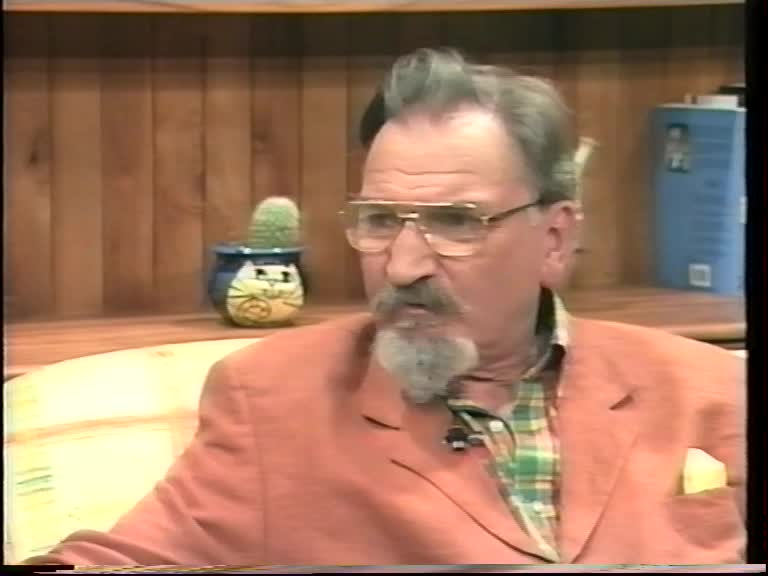
John interviewed about his painting on CHTV City Life, by Sonja de Friez.